The Fitzpatrick Packard in the Joe Bortz collection
/Superstar automotive designers like Harley Earl, Raymond Loewy and Virgil Exner all have a secret. While they can start and even oversee some great designs they usually have swarms of other designers, engineers and craftspeople who actually take those ideas and make them happen. So the Fitzgerald Packard in the incredible collection of Joe Bortz is exceptional in how different it is from so many other “dream cars.”
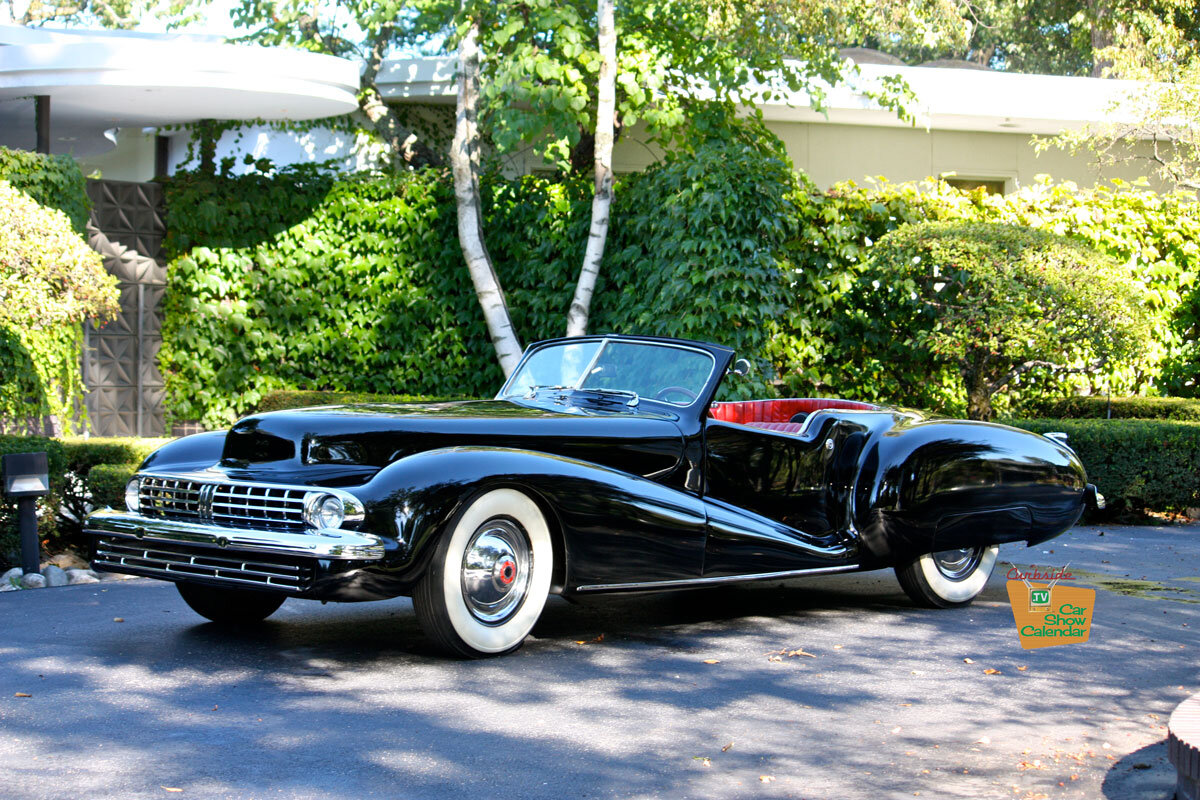
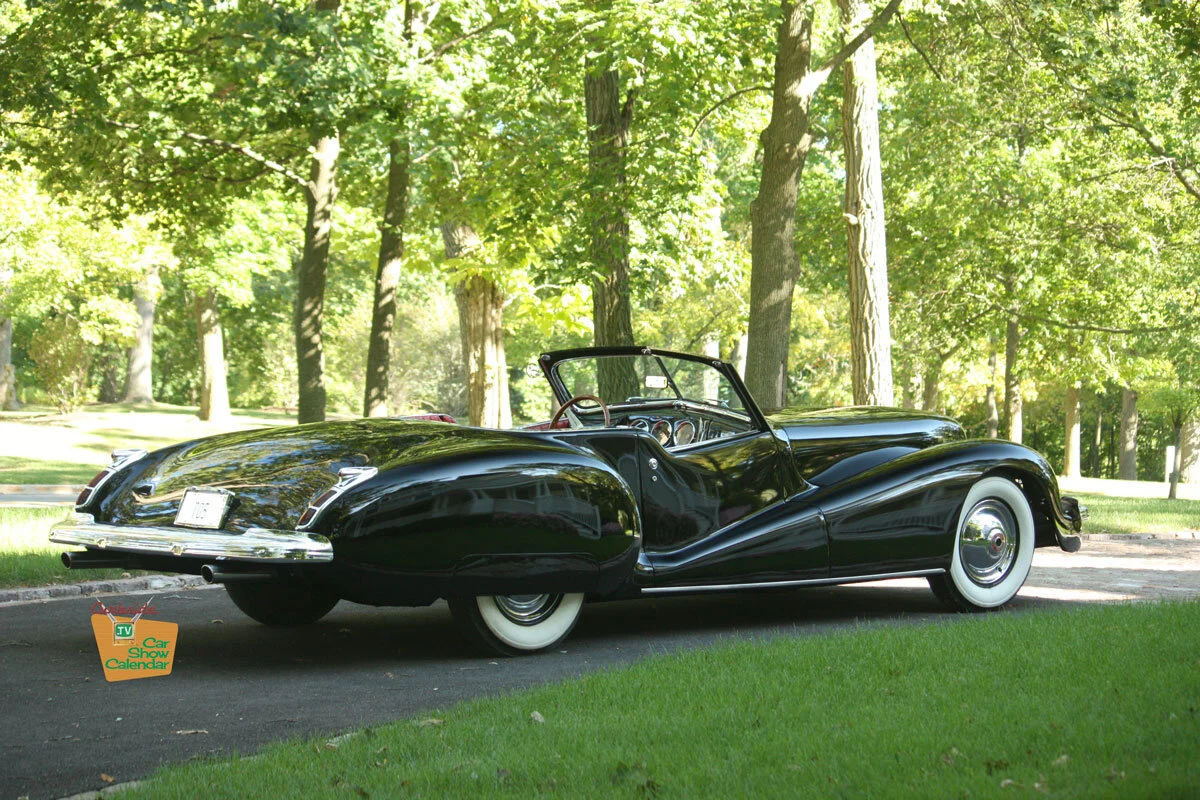
The stunning 1950 Fitzpatrick Packard in the collection of Joe Bortz
First and foremost, the Fitzgerald wasn’t a concept. It was actually the work of an independent craftsperson and the nephew of a real estate agent so that makes it different from the start. But it also represents the work of, basically, two people. Two very, very talented people.
The story is as fantastic as the car itself. And it’s a fantastic car.
the original drawing Lacy showed to Al Fitzpatrick that became the car.
Like so many others, Phil Lacy had served his country in WWII and had returned to the US. At that time in that place Americans were thrilled with automobiles. There was so much excitement around the industry with young lads wanting to be involved with cars and Phil’s passion centered around design. So, while his aunt had hired him to work in her very successful real estate office in Los Angeles, he was more interested in drawing cars.
And so he did.
Phil Lacy was arguably proud of his designs and showed them to Al Fitzpatrick who asked the designer why he didn’t just build one of the cars. Not that this was any small task but Phil admitted that he lacked the funds to do so. Fitzpatrick offered to fund the project if Lacy would build the car and even offered up his incredible body man, “Lucky.”
Thus the project began with Lucky and Lacy applying the beautiful curves from the design on paper to a 1941 Packard chassis. Three years they worked together, hammering and welding and sculpting the car.
While today there would be teams of people working on such a project, all aided by computers, Lucky and Lacy didn’t have this luxury and spent the evenings practicing their craft. The fact that they were able to produce such a beautiful, symmetrical car in a garage is a gigantic feat in itself.
You could argue that this car is as beautiful as those that were coming from Harley Earl’s team over at General Motors and that company even approached Lacy, encouraging him to pursue vehicle design but saying that he should attend a school for the craft.
Before he had a chance to do this, his other incredible skill was called back into play as Lacy’s talent as a fighter jet pilot was needed by Uncle Sam once again, this time over in Korea. It seems that, as talented a designer as Phil Lacy was, he was also one heck of a fighter pilot and Uncle Sam was a very persuasive customer.
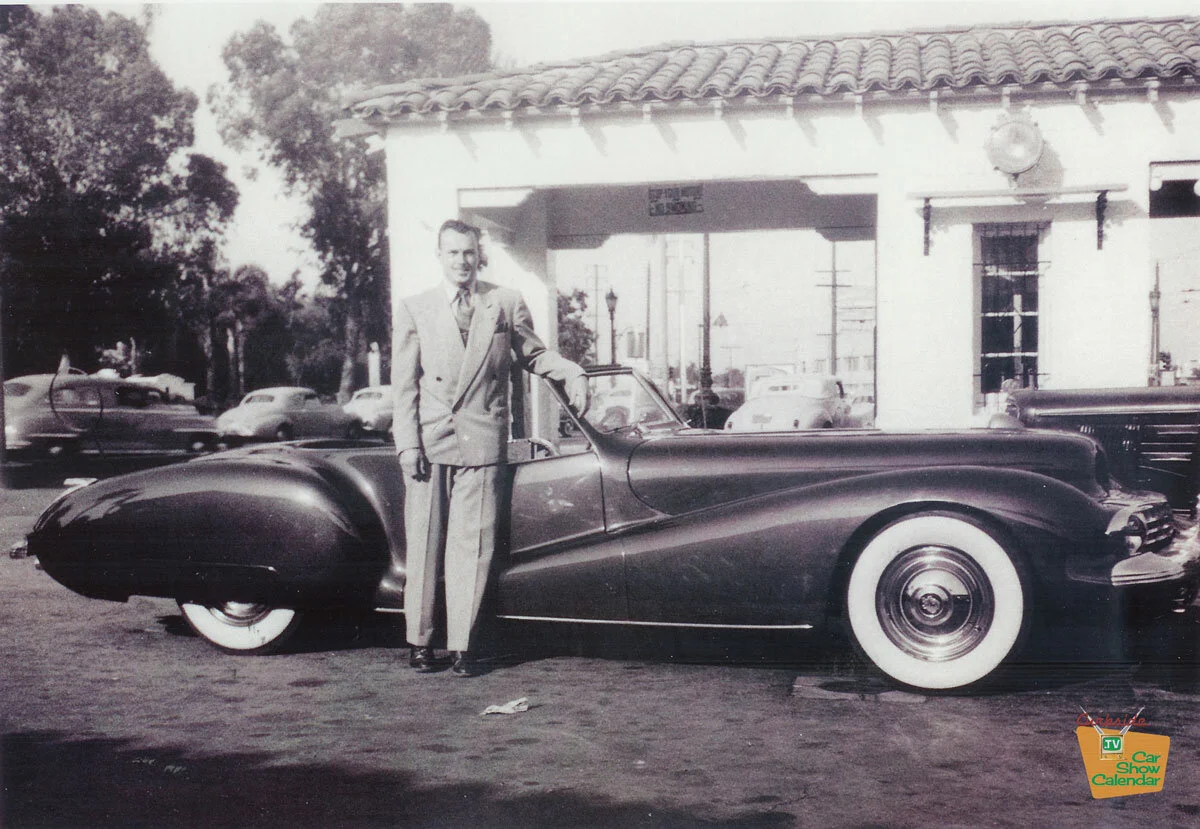
Phil Lacy with the mostly-completed car of his design in 1950.
By the time it came for Lacy to ship out, the nameless car he was working on for Al Fitzpatrick was complete enough that the upholstery shop was the next stop but Lacy waved good bye to the car and headed back to war.
Meanwhile, decades passed. In the interim Phil Lacy came back to his wife from serving his country and started a family. As his son grew up, Phil would show him pictures of the car and tell it’s story, but that car with no name had disappeared into the ether and Phil had no expectations of ever seeing it again.
Meanwhile the car somehow ended-up in Philadelphia where another car aficionado, the one and only Joe Bortz, spotted it parked on a street. Joe was so intrigued with the car he stood there by it and waited almost two hours for it’s owner to return although he never did. Joe had to take his photos of this incredible beauty and go. But Joe managed to figure out who owned the car, a judge in Philadelphia, and so he contacted the judge.
Joe is no wallflower when it comes to cars like this but he is also very, very patient so, over many years, he and the judge kept in touch. Finally the judge was willing to talk about Joe having the car, but the priceless car had a price and that price was a 1953 Cadillac Eldorado convertible. Joe went on the lookout for one but suddenly found the car that the judge would never sell at an auction.
It turns out the car with no name, which was now known as the Fitzpatrick, was such a desirable car that the judge’s friend, who owned the auction company, had convinced him to place it in the next auction. So now the car the judge would never sell that disappeared without a name was on the cover of the auction book and title the “Fitzpatrick Packard.”
And Joe was not happy as he was already scouring the country for that Eldorado. You know, to trade for the car the judge said he’d never sell.
Despite the frustration of the situation, Joe did make it to the auction and bought the car, for too much money as he reports, and has had it ever since.
Being on the cover of the auction book and, Joe being now recognized for his incredible dream car collection, meant that the car was now also famous and that got Skip Lacy’s attention. He called Joe and explained that his father was the car’s designer and relayed the whole story of how the car had disappeared and such.
A reunion was in order! And thus it happened with Joe, the Fitzpatrick and Phil Lacy all in the same place at the same time and with the cameras from a TV show rolling as models uncovered the Fitzpatrick in front of the eyes who had envisioned it many decades before.
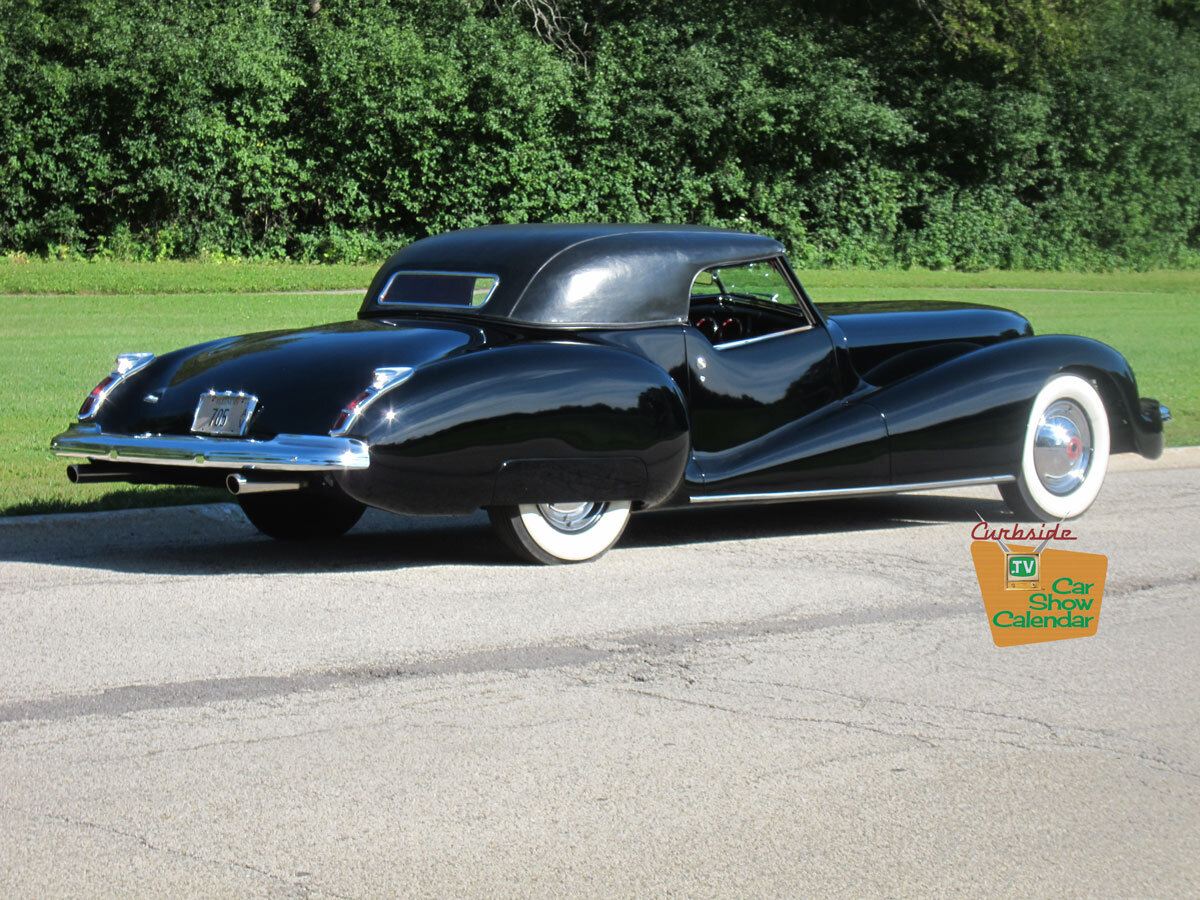
The Fitzpatrick Packard with its Carson Top installed.
In its day the Fitzpatrick was ground breaking not just because of the incredible styling, but also because of some of it’s ground breaking features. For example, the hood latch was electric. The doors dipped down so you could rest your elbows on the tops of them.
In an interview with Lacy he says the car was designed for Southern California where one wouldn’t frequently put the top up. There are no windows in the doors but there was a Carson Top, which was a famous piece for custom cars in the 1940s and ‘50s and was built in the Carson Top Shop in Los Angeles.
At some point in the car’s history a more modern engine replaced the original Packard eight along with an automatic transmission and even air conditioning.
“It runs great,” reports Joe Bortz. In Philadelphia the car had actually been used as a daily driver for a time.
“It’s not the mechanical story that’s important, it’s the styling that tells the stories,” says Joe.
Joe Bortz is one of my favorite car collectors, specializing in collecting the incredible concept cars of the 1950s and ‘60s. Joe’s collection is incredible.
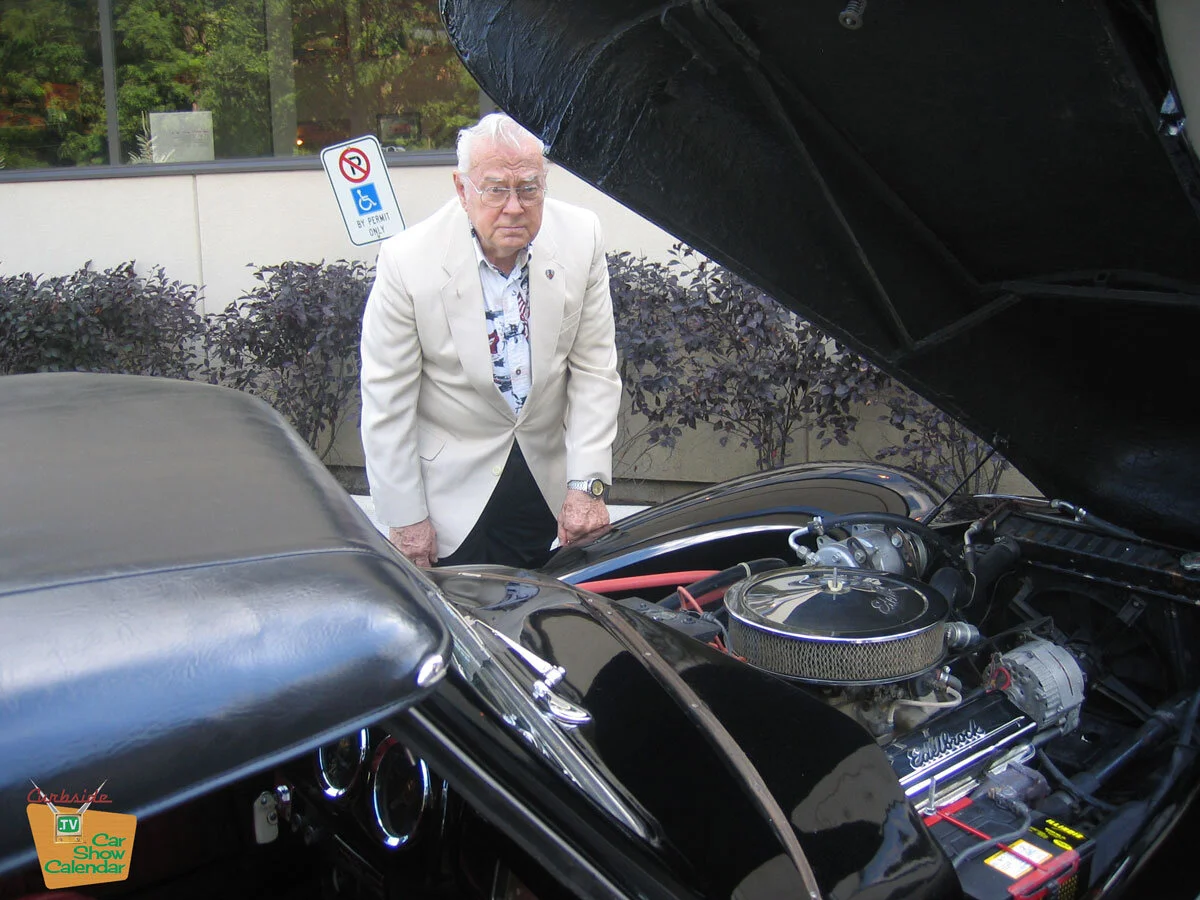
Phil Lacy looking at the engine compartment of the car he designed and helped build. Photo from 2007 TV show.
He describes going to the car shows as a young lad where a pre-teen boy could hop on a street car or bus and stand in the incredible crowds as the dream cars spun around and around on platforms.
“You would sooner imagine yourself as a pro ball player as ever even getting to sit in the seat of one of those cars.” Indeed they were truly special and, sadly, many of them did their tour on the auto show circuit and ended up in the crusher as their welcome home.
In fact, we’ve got several stories and episodes of the podcast about some of Joe Bortz’ nifty machines and how he has saved them from junk yards and other sad final endings.
Fortunately the Fitzpatrick and its designer have been reunited. And, today, it’s just as groundbreakingly stunning as the day it rolled from the designer’s page to the streets of Southern California. And I thank Joe Bortz for keeping the car in his collection and sharing it with us here on the Curbside.