Dodge Deora - a custom and a concept
/Some concept cars just stay in the minds of those who have seen them and one of those is the 1967 Dodge Deora. Perhaps the popularity was spurred by this concept being honored as one of the first of Mattel’s Hot Wheels cars or just that it was cool, but the Deora was certainly different. And, actually, it wasn’t really a concept but was a custom.
Debuting at the Detroit Autorama in 1967, the Deora won nine awards including the Ridler award. It was based on a compact Dodge A100 pickup but was created based on the design of Harry Bentley Bradley from 1964.
While the branding is Dodge, there were a lot of Ford parts used in the design including the back hatch of a Ford Wagon serving as the vehicle’s windshield complete with the flip-up mechanism providing the only access to the cab. Yep, you got in by flipping up the windshield.
But that wasn’t the only Ford part on this by any means. The rear window also came out of the Ford parts bin and the exhaust ports, which were in the middle of the side of the bed, were tail light rings from a Ford Mustang. Even the tail lights were Ford parts being the three-segment Thunderbird lights retaining their sequenced blinking design. But the lights were aimed downward at a bright metal band across the back so what you would see would be the reflection of the lights, the lamps themselves were hidden.
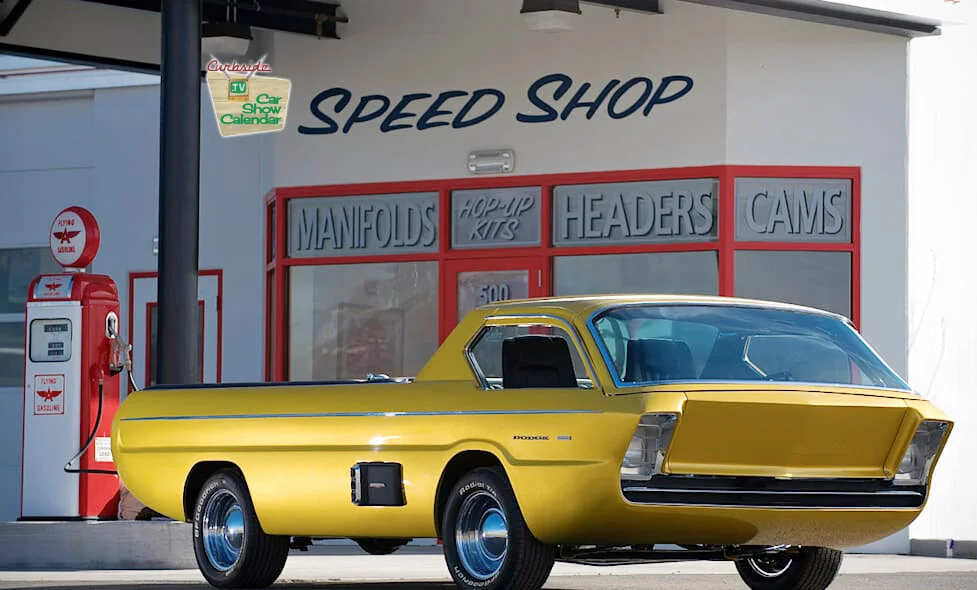
While the car looked fast, it wasn’t. Under the “hood” was Chrysler’s venerable 225 cubic inch “slant” six engine but the design moved this back some 15 inches on the chassis so it was no longer intruding into the cab. Instead, it resided below a hard tonneau cover in the bed.
Initially the name was going to be XTAB (standing for eXperimental Truck Alexander Brothers) but AMT models, a maker of plastic model kits, has a contest to choose a sexier name for the vehicle and a 13 year old boy came up with the moniker.
The idea for the name "Deora" came from taking the "b" out of Debora, a girl he was enamored with at the time, although many people assume that it came from and is a technically incorrect version of the Spanish word for “golden”.
While the show car wasn’t commissioned by the Chrysler Corporation, they liked it so much along with the associated publicity, that they leased it for two years to place with their factory concepts on the show circuit. The car was actually commissioned by Mike and Larry Alexander who were very much part of the show and custom car circuit at the time.
When they showed he concept drawings to Chrysler that company donated a Dodge A100 pickup to the cause and the Alexanders, along with Harry Bradley, commenced to creating the Deora.
Bradley was obsessed with eliminating the cut lines where a car door would usually operate which is how the front-entry windshield came to be. While the original design was intended to have the whole front section swing up, the thin A-pillars of the Dodge pickup wouldn’t support this so just the windshield, which came from a 1960 Ford wagon, opened upward.
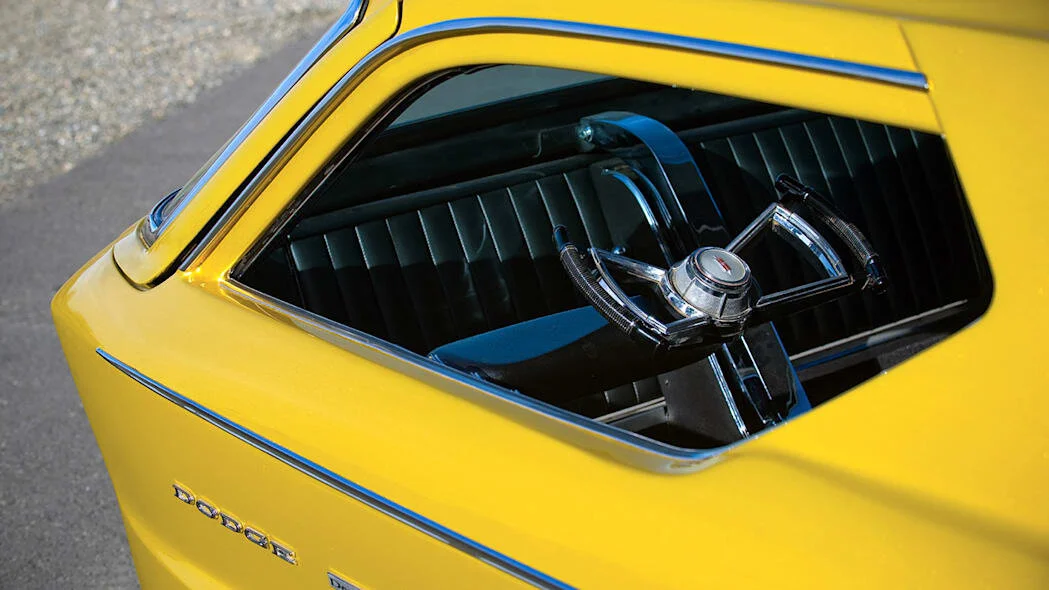
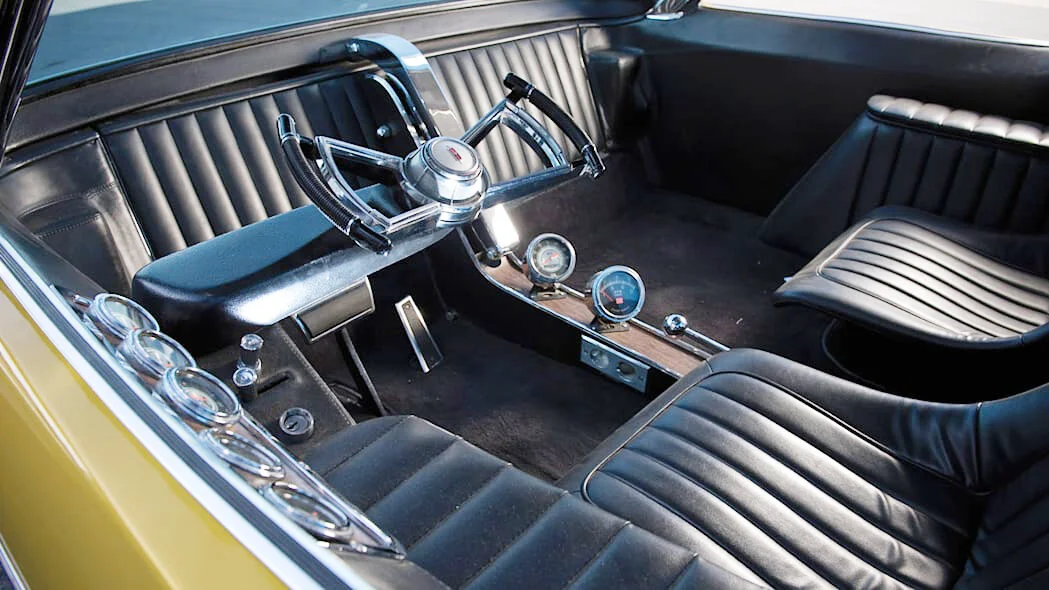
To facilitate entry and exit there was a lower portion which also swing open on its center. The stock steering column was replaced with a folding horizontal strut that rotated forward from the left side of the body to let the driver in and out, not unlike a BMW Isetta. It locked into place when the driver was seated. The steering wheel was a stylish butterfly-shaped yoke, reportedly made from an Oldsmobile steering wheel, which would have been right at home in a small aircraft.
In order to achieve that ultra-low look, the radiator was relocated in the bed as well, just ahead of the rear axle. Twin air intake holes were cut into the bottom of the bed, and an electric fan was used to draw in cooling air. That meant that the fuel tank had to be moved from its stock location behind the rear axle to a new position just behind the cab.
The pickup bed itself was covered with a hard tonneau that was secured by chrome hood locking pins. That tonneau cover was padded and covered with black vinyl and, in true 1960s style, there was a strip of fake wood along the top.
To effectively lower the chassis, the Alexanders raised the front frame rails and ran the front springs through the axle. Short-coupled industrial shocks replaced the original tubular shock absorbers in front. They also modified the rear suspension.
The overall height of the truck went from about 72 inches in stock form, to just 57 inches after modifications. Contoured bucket seats leaned rearward just a little to accommodate the Deora's two occupants. The cockpit itself was trimmed in pleated leather.
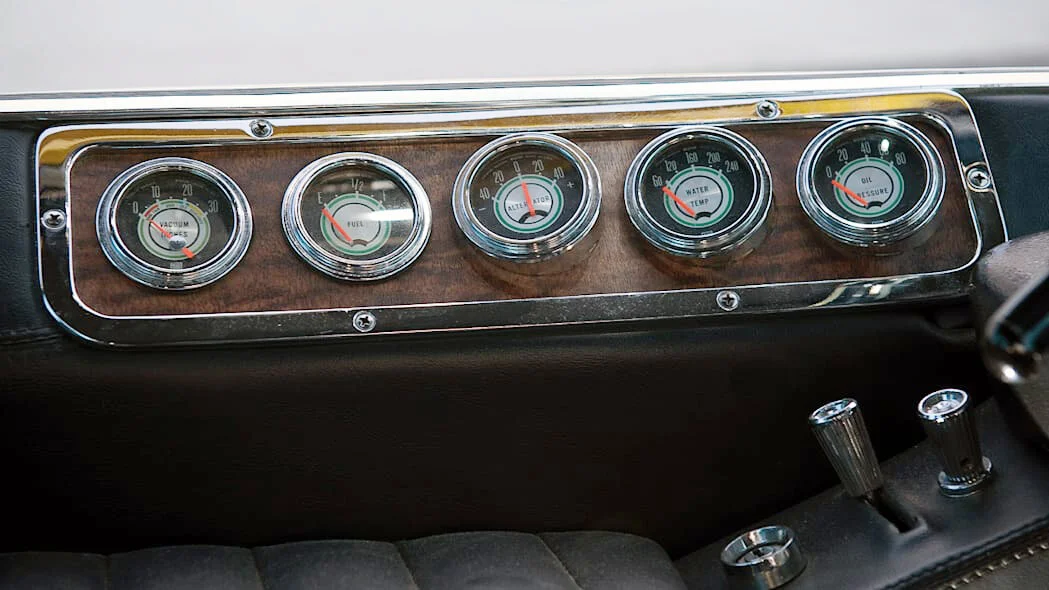
In keeping with this car's atypical design, the instrument panel was relocated to the driver's side door, and a center console held a speedometer and the tachometer.
At the 1967 Detroit Autorama, the Deora completely swept the show, winning nine trophies plus the coveted Don Ridler award for the best new custom car. It was a poignant moment for Mike and Larry Alexander. Their father died on the morning of the Autorama setup day, but their mother convinced them that their Dad would have wanted the Deora to be shown. Interestingly, that was the only time the brothers ever showed the car in competition.
After the Deora was completed, Chrysler leased it to display on their auto show stands with their own concept cars, where it reportedly caused a sensation. Chrysler Corporation, who'd had nothing to do with the design save the donated A100 itself, claimed this car was a quantum leap in advanced vehicle styling.
The Deora is still around today, most recently having been sold at auction for a cool $324,500. It’s still as much a show stopper as it was when it first made the scene.
Apparently the truck had been in storage for years so when it was brought back out the paint had deteriorated and the Alexanders didn’t keep the paint formula. According to some, the present day color has a bit more green than the original, but it still looks incredible with that gold paint job and go fast low roofline.