The 120mph BMW Isetta
/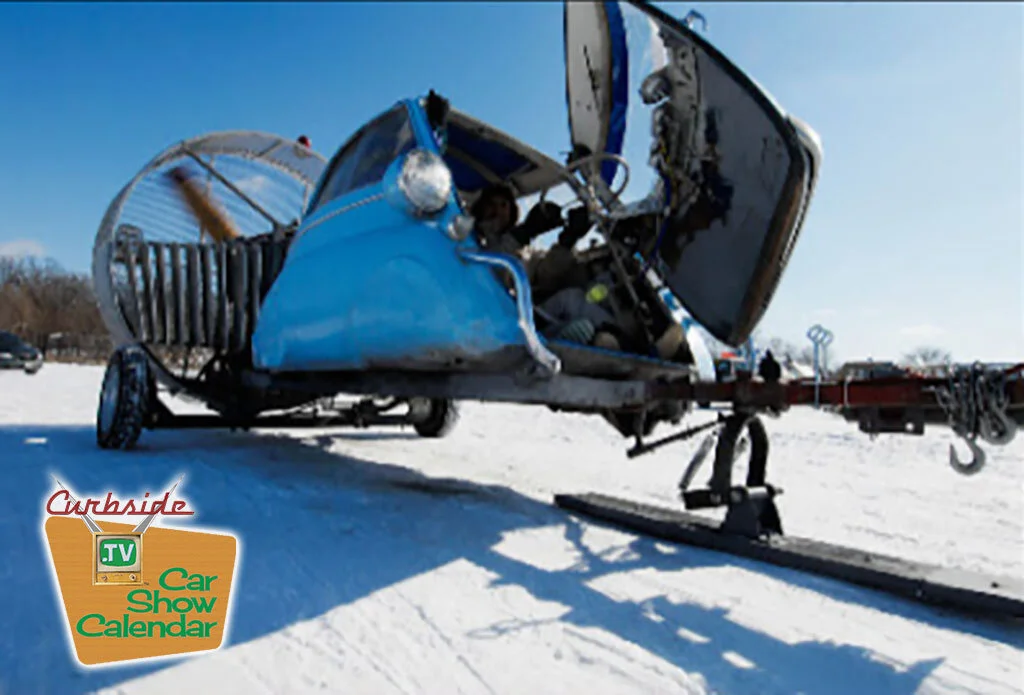
Fitted with skis, the Isetta was good for 120mph.
The BMW Isetta is one of those iconic cars that draws instant smiles whenever you see one puttering around. And puttering is the best way to describe the little single-cylinder cars with their entry door that is the entire front of the vehicle. But the fact that owner David Major is happy when the little things could hustle down the road at 45 miles per hour so he did something to improve upon the situation.
David Major is a fan of Isettas. He’s restored dozens of them since his early days in college.
Like many kids in those days, David had a car that could scorch the pavement. In this case it was a ’51 Ford but fitted with a Corvette engine with two four-barrel carburetors. That’s all well and good when you’re in high school and all your money can go toward cars, but once he hit college priorities had to change.
Thus he sold the Fordolet (that’s a Ford with a Chevrolet engine, right?) and looked in the paper for something that would cost less to drive. Being of German descent, he was immediately intrigued when he saw an ad for a BMW.
In this case it was a BMW Isetta 600, the “big” Isetta, and at $125 it was a great deal, made even better by the fact that he negotiated the price down to $100. But his girlfriend at the time didn’t appreciate the anemic heater in the car and, rather than trade for a different lady, he got a different car.
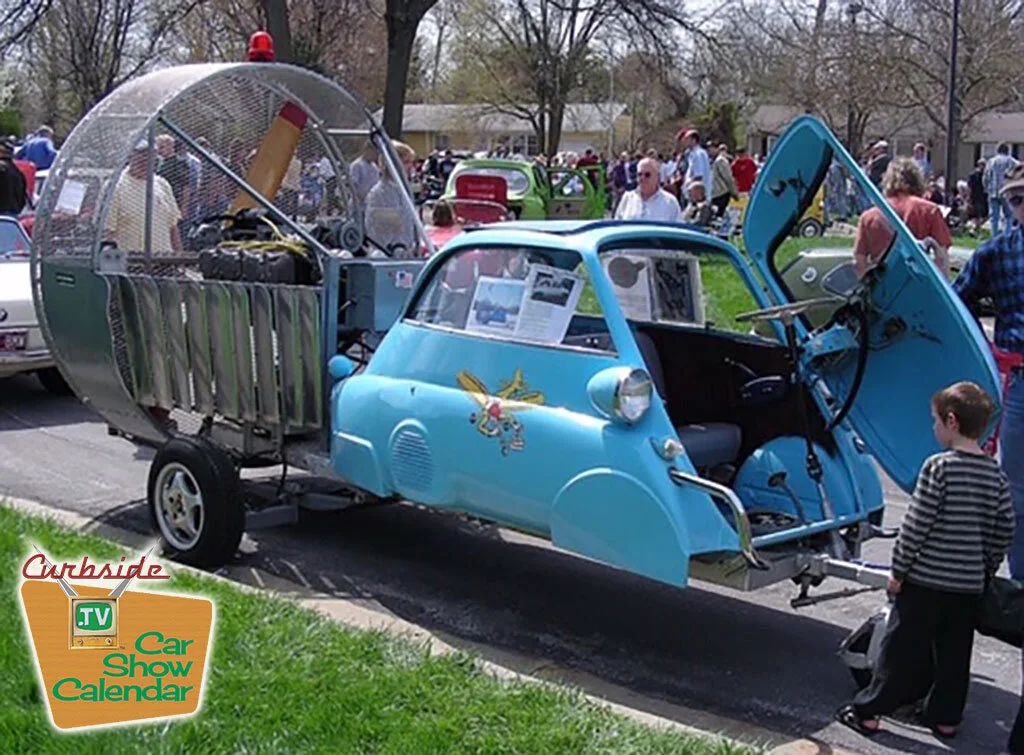
A few years after college David was remembering the fun he had in the little Isetta 600 and he found one and did a little work to it. And then sold it at a profit.
In fact, he repeated this process some 35 times with 600s and another 10 with 300s.
David is a school teacher and, as he says, “One thing about teaching school is that you get the whole summer off. There were summers where I made more money buying selling these little Isettas than I did the other nine months of teaching school.”
After buying, selling and restoring Isettas he’s seen just about all he can see and is enough of a resource in the Isetta restoration community that people come to him with questions.
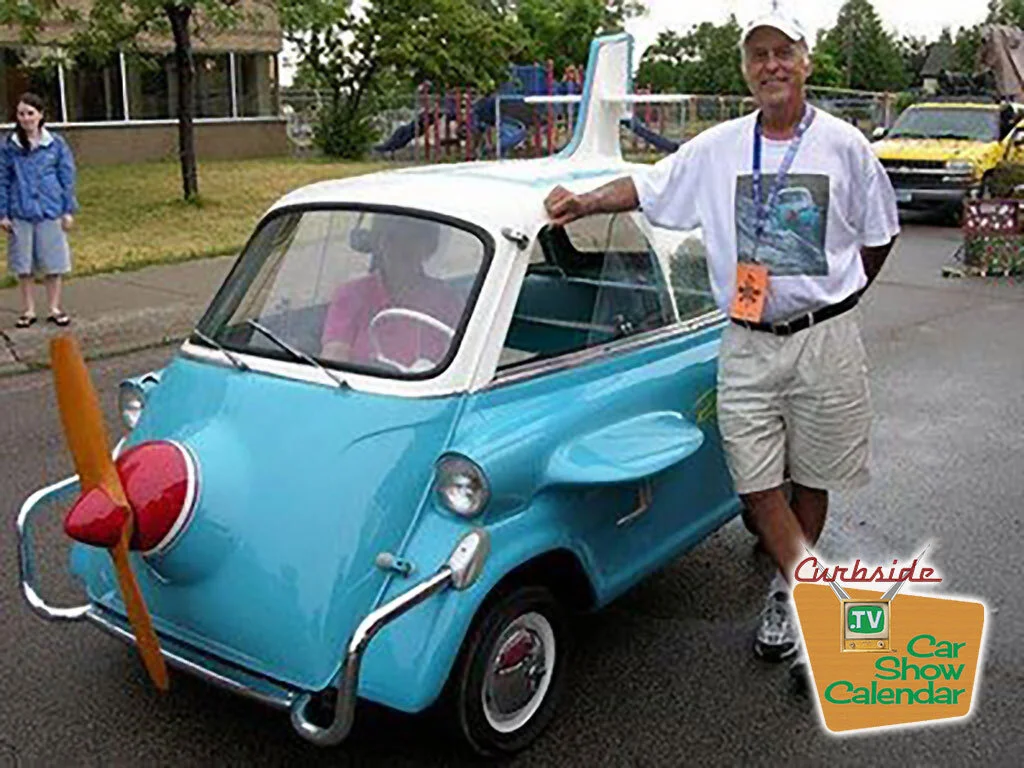
David Major and the aerocar.
Sometimes, he sees older cars that are just in need of some TLC but there are cases where cars are just shadows of their former selves. And such was the case with one Isetta, in particular, where the car was basically just a body - no running gear, no chassis. Nothing.
Being a huge aviation buff as well as a fan of Isetta, our subject decided to combine his passions and make a few improvements on the original design. Crafting a special chassis David then mounted a single-wheel front on the car and, out back, a 435 cubic inch six-cylinder air-cooled Lycoming engine from 1942.
For perspective, one piston on the Lycoming engine is almost three times the size of the single cylinder that originally came with the Isetta 300.
But a larger engine isn’t the whole story on this, you see David motivates the little Isetta with a giant wooden airplane propeller. Hey, it’s an aircraft engine!
So while his state won’t give him a license for the vehicle, that doesn’t stop him from trailering the vehicle to car shows and even entering it in parades.
“It’s being blown down the road.” Makes you wonder if they need to do street sweeping after the parade or if he whole area is blown clean.
It doesn’t hurt that David lives on an airstrip where he’s been able to test the propeller-driven Isetta on the runway, saying it’s good for about 45 miles per hour with the single front wheel. But when winter comes around, he replaces that wheel with a ski and that’s where he’s been able to go over 100 miles per hour.
In fact, he’s clocked 120 on a frozen lake. In a propeller-powered BMW Isetta.
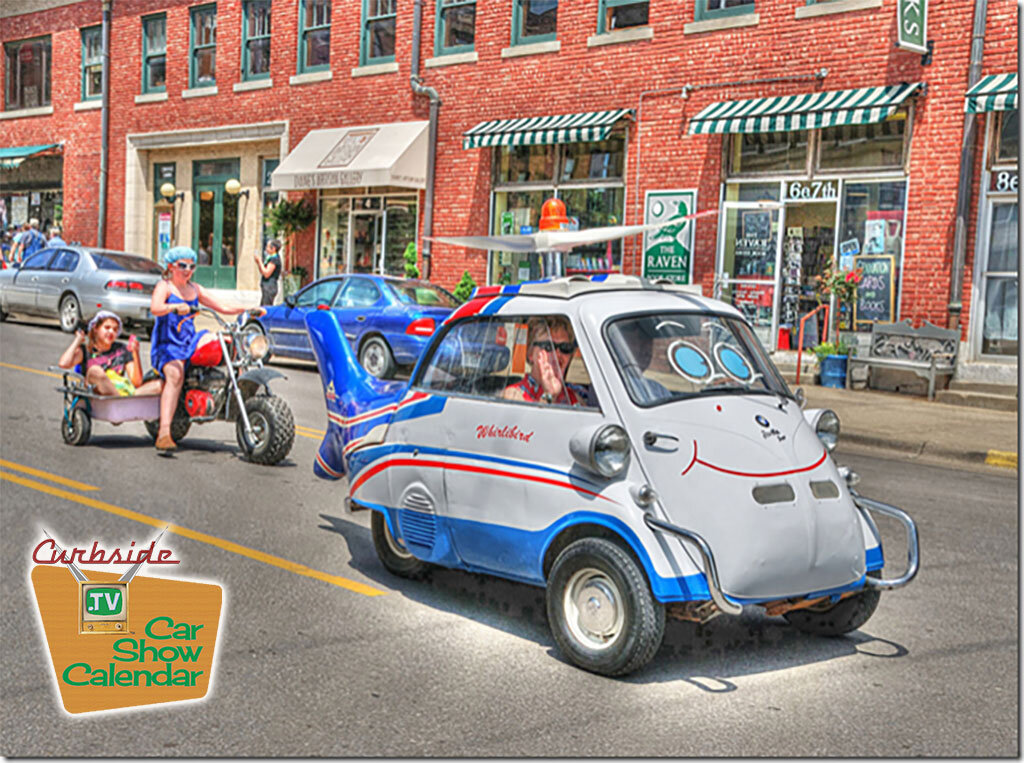
That may be one of the reasons his wife doesn’t like the car. It is pretty loud, after all. “It’s loud but that’s what I like about it,” said David, “She’s a pretty good sport about it.”
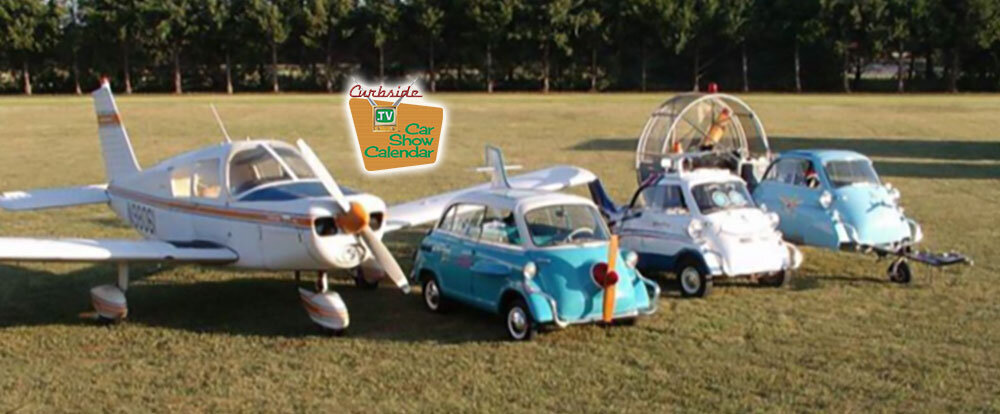
While she may not be a fan of the propeller-powered car, she’s quite pleased with another Isetta David owns with a propeller on it. This is an Isetta 600 where he’s mounted an electric propeller on the front for show only, although it does spin slowly. The aircraft theme is continues to the top where there’s a simulated rudder and even the side has little winglets.
“Some people say, ‘you’ve ruined an original’ but it’s what I like to do,” David noted. “II have more fun with the ones I’ve changed a little bit.”
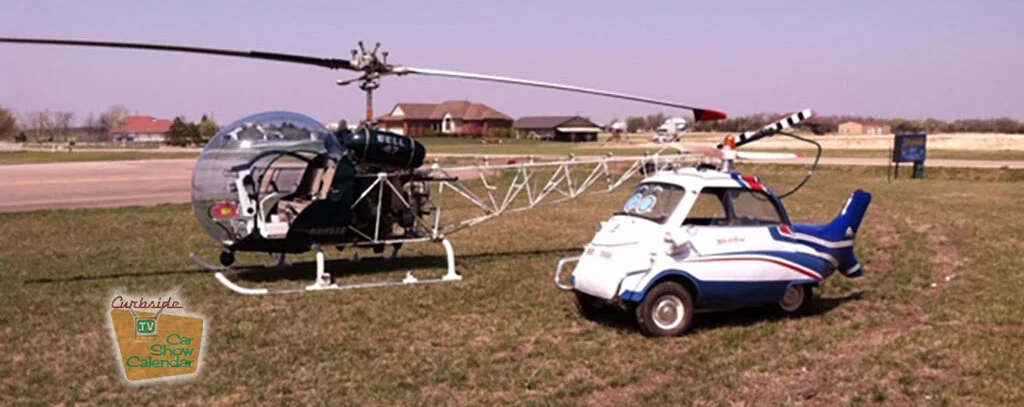
After turning a 600 into a makeshift plane, he got more inspiration from flying machines, turning a 300 into a helicopter-themed car.
Hey, why not? If people can lower, bag, chop and otherwise modify cars who’s to say you can’t make them look more like aircraft? After all, David does live on an airfield so inspiration is all around.
One of the more fun annual trips the Lycoming-powered Isetta makes is to a parade in nearby Andover Kansas. The route is typically straight down the street, however there is a sharp left turn so the crowd gets a nice blast of wind. “We make that left turn and I’ve had several people tell me they thought there was an airplane coming down the highway.”
David Major’s Isettas are a fun interpretation of a unique little car. He’s not done, either as he is presently restoring an Isetta just so he can teach his grandchildren to drive a stick shift.
Isetta History
Isetta actually started in Italy as the Iso Isetta, an Italian-designed and built microcar built after WWII in Europe when resources were extremely scarce. In 1955 licensee BMW’s version became the best-selling single-cylinder car in the world and why not? Fuel mileage was over 80mpg with some reports as much as 94 miles per gallon.
The term means “diminutive” in Italian but the Germans are the ones who built over 160,000 units under the BMW name. Isettas were also built under license in France, Brazil, Argentina and more.
Two models were built by BMW - the smaller Isetta 300 which sported a single-cylinder 300cc engine, and the larger 600 which actually had a back door to give access to the back seat. Initially the Isetta sported a 250cc motorcycle engine and the inaugural production was called the 250, but rules changed in Germany so BMW enlarged the powerplant and the 300 came about.
BMW’s Isettas were almost completely re-engineered from the license such that their parts are almost completely unique from the original car in Italy. One of the common misconceptions about the Isetta is that it’s a three-wheeled car but, in fact, BMW’s versions have four wheels. On the 250 and 300 models the rear wheels are so close together there is no need for a differential and the car’s body makes it look like a single rear wheel.
As Germany and the rest of Europe rebuilt and became more prosperous the cars known as Kabinnenrollers became less popular so BMW’s 600 model couldn’t really compete with the VW Beetle at the time, which actually looked like a car and sold for similar money. And, thus, only about 34,000 of these “big” Isettas were sold until the company pulled the plug.